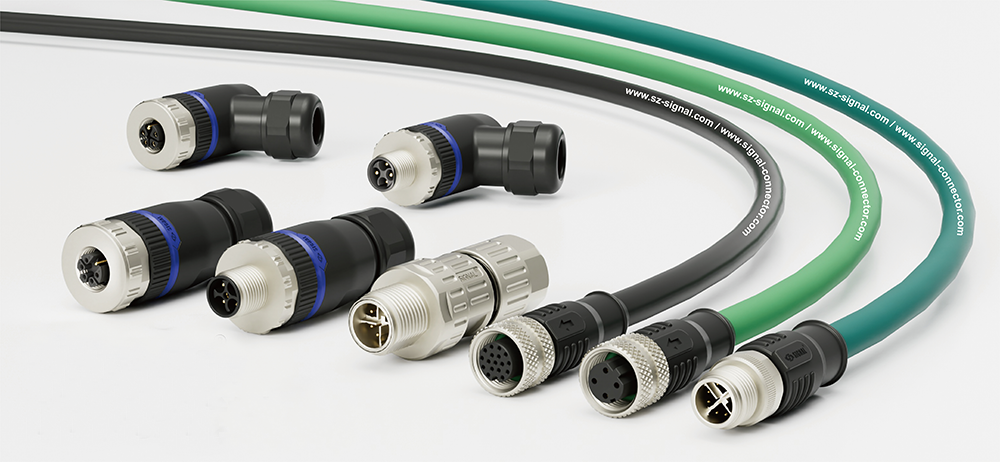
As gold prices continue to rise, the plating cost for a high-performance connector can account for as much as 60% to 70% of its total cost. Consequently, some engineers have begun to re-evaluate the necessity of gold plating solutions for connectors. Today, the editor at SIGNAL will break down the core differences between the mainstream plating metals used in the connector industry.
The mainstream plating metals for connectors primarily fall into four categories: gold, silver, nickel, and tin. These four metals differ SIGNAL Editor across key metrics—such as cost, conductivity, and corrosion resistance—and are each best suited for specific application scenarios.
I. Gold Plating
Gold plating is considered the "gold standard" for high-end connectors. Gold is one of the least reactive metals; it does not react with oxygen or moisture, and it demonstrates exceptional oxidation resistance in extreme environments.
Advantages: Exceptional corrosion resistance, high conductivity, enhanced durability, ductility, solderability, and non-magnetic properties. Applications: Aerospace, high-end communication equipment, medical devices, and high-frequency connectors.
II. Silver Plating
Silver is also a precious metal, but its price is significantly lower than that of gold, making it more widely applicable. Furthermore, silver plating is typically applied in greater thicknesses than gold plating. It provides an excellent conductive surface while effectively preventing corrosion.
Advantages: Extremely high electrical and thermal conductivity, corrosion resistance, and lubricity. Applications: High-current applications and RF connectors; particularly suitable for high-current-density applications where enhanced reliability is required.
III. Nickel Plating
Nickel effectively acts as a barrier against atomic diffusion between the base metal and the surface plating, serving as an ideal "intermediate barrier layer."
Advantages: High hardness, excellent wear resistance, and strong adhesion. Applications: Primarily serves as an underlayer for gold, silver, or tin plating to enhance the overall stability of the coating system. It is also utilized for protective underlayers on connectors operating in high-temperature or oil-contaminated environments, such as within automotive engines.
V. Tin Plating
Tin plating is the most common and cost-effective plating option available. It is typically applied to connector pins, where the base material is predominantly a copper alloy.
Advantages: Easy to solder; furthermore, the plating thickness can reach several hundred micro-inches, allowing for multiple mating cycles. Applications: Consumer electronics, industrial control systems, and general electronic equipment.