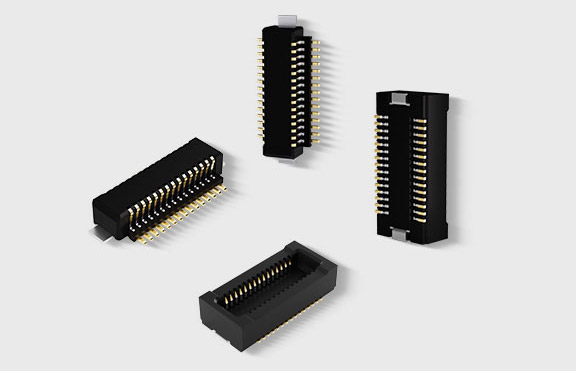
Board-to-board connectors facilitate electrical connections between circuit boards and offer the highest signal transmission capabilities among all connector types. They can be categorized based on their connection methods, with each type possessing unique characteristics. So, how should one select the right board-to-board connector?
1. Brand
A brand's market reputation and recognition significantly influence purchasing decisions, serving as a key indicator of product quality. However, products from major brands often come at a higher cost; therefore, when selecting a connector, it is essential to balance the budget against the need for quality assurance, opting for a brand that offers both reliability and cost-effectiveness.
2. Specifications
Board-to-board connectors come with a wide range of electrical specifications—such as pitch, pin count, power rating, industry standards, environmental ratings, transmission rate/frequency limits, mechanical specifications, and physical dimensions. Selection should be based on a comprehensive assessment of factors including the operating environment, power requirements, usage lifecycle, and the size of the electronic device.
3. Style/Type
Board-to-board connectors are available in various shapes and sizes, enabling modular designs for multi-board PCB systems. Common types include pin headers and female headers, mezzanine connectors, card-edge connectors, backplane connectors, and standardized connectors. These connectors can be further classified into categories such as ruggedized, high-speed, high-frequency, and high-current/high-power types; the choice depends on the specific application scenario.