Which is better for waterproof connectors: screw crimping or soldering?
waterproof cables are commonly used in outdoor or humid environments to ensure the safety and reliability of electrical connections. The choice between screw crimping and soldering depends on the specific application requirements and material types. Here are some of their advantages and disadvantages:
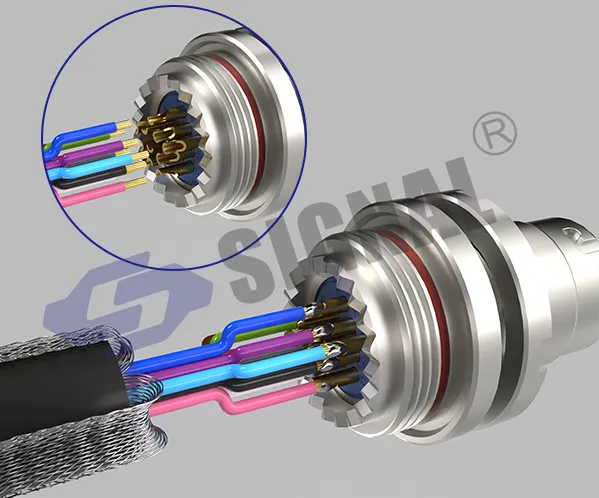
Which is better for waterproof connectors: screw crimping or soldering?
I. Soldering:
Advantages:
1. High reliability: Soldering is a connection method without moving parts, offering good electrical and mechanical performance, resulting in a stable and reliable connection.
2. Better waterproof performance: Soldered connections have no threads or interfaces, providing better waterproof performance.
Disadvantages:
1. Irreversibility: Soldered connections are permanent and cannot be easily disassembled; professional soldering tools are required.
2. Requires professional skills: Soldering requires skilled soldering techniques and experience, and is not suitable for non-professionals.
3. Limited applicability: Soldering connections have certain requirements for the materials and shapes of cables and connectors, and are not suitable for all types of connections.
II. Screw Crimping:
Advantages:
1. Removability: Screw crimping connectors make connecting and disconnecting cables easier, facilitating maintenance and replacement.
2. Wide applicability: Screw crimping is suitable for various types of cables and connectors, adapting to different needs. 3. Vibration and Shock Resistance: Screw-type crimp connections offer high fastening strength and can maintain connection stability in vibrating or shock environments.
Disadvantages:
1. Waterproof Performance: The waterproof performance of screw-type crimp connectors may have certain limitations due to factors such as materials and structure.
2. Higher Cost: Compared to welding, screw-type crimp connectors may have a higher cost.
In summary, the choice between screw-type crimping and welding depends on the specific application requirements. If frequent disassembly and replacement are needed, or if the waterproof requirements are relatively low, screw-type crimping is a more practical option. If higher connection reliability and better waterproof performance are required, and a permanent connection is acceptable, welding may be a better choice, but it requires more skilled operation. In practical applications, an evaluation and selection should be made based on the specific circumstances.