We know that copper is a widely used conductor material, possessing excellent electrical and thermal conductivity as well as low signal transmission attenuation. Therefore, most wires use copper cores, while signal transmission cables typically use nickel-plated copper.
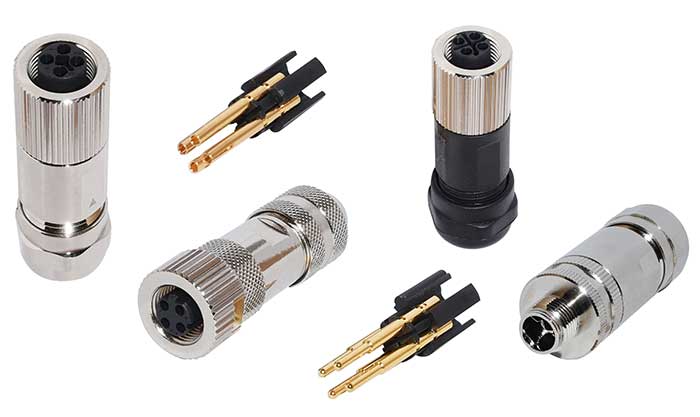
So why are connector terminals plated with gold? Because terminals, compared to conductors, require switching between conductive and conductive states, thus demanding higher levels of resistance to oxidation, corrosion, and insertion.
1. Oxidation Resistance: As a transition metal, its ionization energy is as high as 890.1 kJ/mol, second only to mercury (1007.1 kJ/mol), far exceeding other metals. This means it is extremely difficult for oxygen to gain an electron from gold. Simultaneously, its atomization enthalpy is also very high, reaching 368 kJ/mol, meaning gold has stronger metallic bonding forces; gold atoms have strong intermolecular attraction and are not easily stripped away by other atoms.
2. Corrosion Resistance: Gold is a relatively inactive metal (lower than copper, tin, etc., ranking low in reactivity). It generally does not react with corrosive substances such as acids and alkalis and is not easily corroded by oxidation, sulfidation, etc. 3. Mating and Removal Resistance: Gold is an inert metal and is extremely difficult to oxidize and discolor at high temperatures. After a period of frequent insertions and removals, it may show signs of blackening, which can be restored to its original state by wiping with diluted detergent.
So, how thick should the gold plating be?
Generally speaking, the thicker the gold plating on the terminals, the better, as it is less prone to oxidation and provides stronger corrosion resistance and mating and removal resistance.
However, how thick should the gold plating be for connectors? This depends on factors such as current and salt spray requirements. The thickness of the gold plating on the connector pins is directly related to the current and salt spray requirements, as well as the application scenario. For a normal 1A-2A current, 1-3U gold plating is sufficient. If a higher current of 5-30A is required, or the operating environment is harsh with a salt spray test exceeding 48 hours, 5-30U gold plating is needed. Thicker plating generally results in higher costs.